

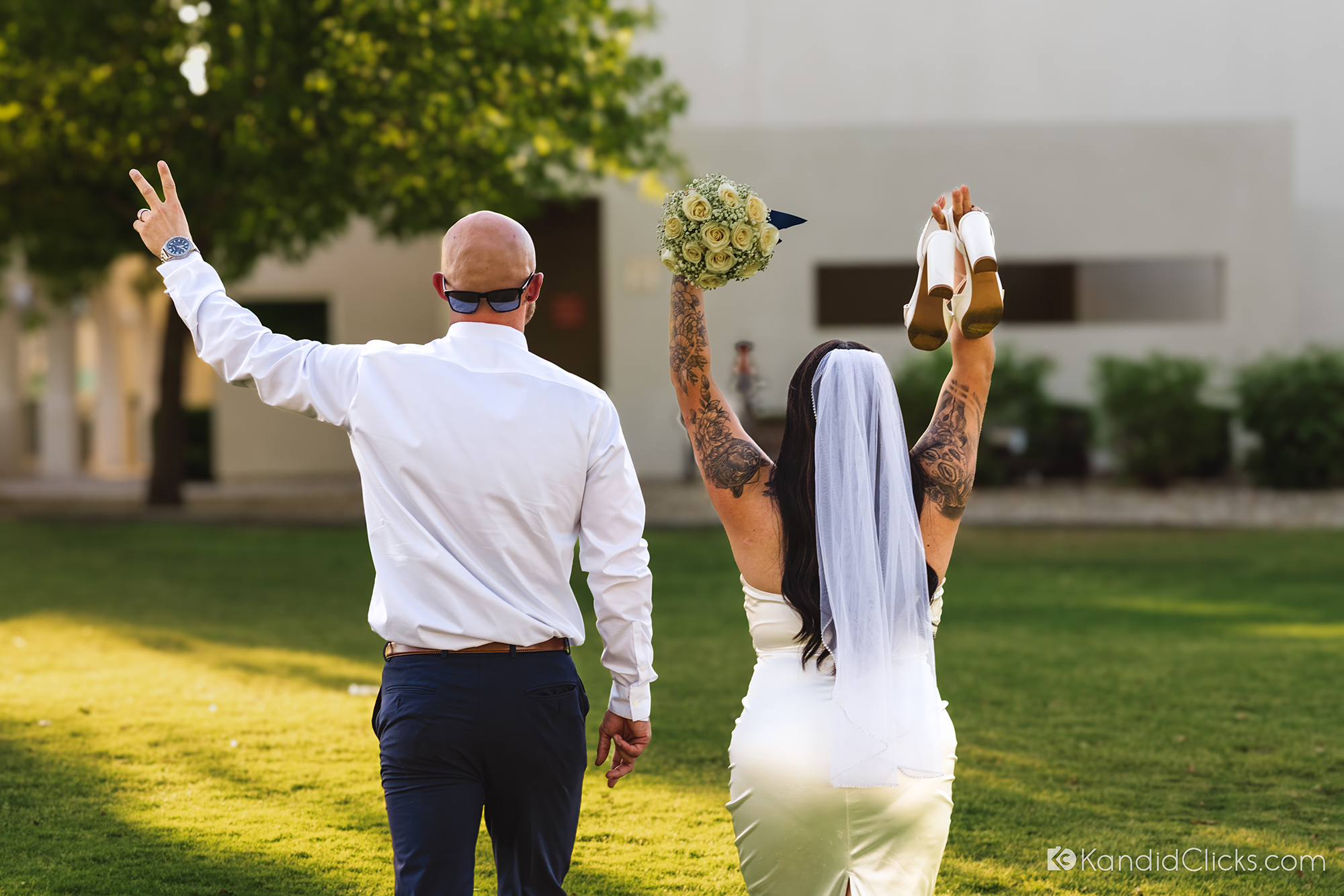
When One Day Is Not Enough to Hold the Whole Story
Almost every couple I work with says the same thing afterward: the wedding day went by in a blur. They barely remember eating dinner, they wish they had more time with certain people, the whole thing evaporated in hours. That blur is exactly the problem a multi-day wedding solves. When you stretch the celebration across a welcome dinner, the main event, an adventure session, and a farewell brunch, you stop sprinting through the most important day of your life and start actually living it, with someone there to document the entire arc.
More couples in Phoenix are choosing this, especially those planning destination celebrations, multi-day cultural weddings, or resort weekends with guests flying in from everywhere. But here is what most guides on the subject miss. They sell you the romance of a multi-day celebration without telling you how to actually execute the photography, and done carelessly it can drain your photographer, blow your budget, leave gaps in coverage, and still miss the moments that mattered. There is even a contrarian camp of photographers who argue that all-day coverage is overkill. They have a point worth hearing. So this is the full picture, from a working photographer: how to plan it properly, what it costs, where the real risks hide, and how to know whether you even need it.

Think in Chapters, Not Hours
The single biggest mindset shift is this: stop treating a multi-day wedding as one very long event and start treating it as a series of distinct chapters, each with its own mood, pace, and photographic purpose. When you map it this way, the planning becomes obvious, your photographer can pace their energy and coverage to match, and nothing important falls through the cracks.
A well-structured wedding weekend usually breaks into four chapters. Understanding the job of each one is how you decide where coverage actually earns its place.
Chapter one: the welcome and connection
This is the arrival. Welcome drinks, a rehearsal dinner, an adventure activity, an intimate gathering as guests trickle in from the airport. The photographic job here is documentary and candid. Nobody is posing. People are hugging, laughing, reuniting after long absences, and these are some of the warmest, most unguarded images of the entire weekend precisely because the formality has not set in yet. This is also the chapter where your photographer quietly builds rapport with you, so that by the main event you are completely comfortable in front of the lens. A photographer working this chapter should fade into the background and shoot like a documentarian.
Chapter two: the main event, or events
This is the wedding day itself, and it carries the heaviest, most structured coverage. For multi-day cultural weddings, this chapter may span more than one day on its own, for example a Mehndi or Haldi or tea ceremony on one day and the main ceremony and reception on another. The focus is comprehensive: getting-ready moments, the first look, couple portraits, the ceremony, family formals, and the full reception through to the send-off. This is where a tight, well-built timeline matters most, the kind of full wedding-day flow I lay out below.
Chapter three: the adventure or editorial session
This is the chapter most couples forget to plan, and the one that reliably produces their favorite images. It is an epic, couples-only excursion completely free of the wedding-day schedule. A sunrise hike to a desert overlook, a golden-hour drive into the Sonoran landscape, a quiet walk somewhere stunning with no guests and no clock. Because there is zero pressure, the portraits here turn out cinematic and intimate in a way wedding-day portraits rarely manage. It can happen the morning of, the day after, or even fold into a honeymoon session. Some of the most treasured shots come from this unhurried time when you can simply explore and be photographed as it happens.
Chapter four: the farewell
The closing chapter. A morning-after brunch, a casual send-off, last goodbyes over coffee. The mood is warm, relaxed, a little tired in the best way. These photos act as the natural ending to your story, the emotional exhale after the build and the climax. They are unforced and casual, and they give your final gallery a sense of completion that a single-day collection simply cannot.

A Sample Multi-Day Photography Timeline
Here is roughly how a three-day Phoenix weekend can flow. Adapt it to your own events.
On Friday, the welcome chapter: two to three hours of documentary coverage in the evening as guests arrive for the welcome dinner, shot loosely and candidly with no rigid schedule. On Saturday, the main event: full coverage running ten to twelve hours, from morning getting-ready through the late-night reception send-off, tightly timed and comprehensive. On Sunday, the farewell and adventure: an early couples-only adventure session at golden hour for one to two hours, followed by relaxed coverage of the farewell brunch.
For the main day itself, a proven full-coverage timeline looks something like this. The photographer arrives around three hours before the ceremony for getting-ready and detail shots, the rings, invitation suite, dress, shoes, perfume, and bouquet, which set the visual scene. Getting-ready candids and the wedding party run through late morning into early afternoon. If you are doing a first look, the first look and couple portraits land roughly two hours before the ceremony, followed by wedding party photos and then immediate family formals, so that the couple is tucked away before guests arrive. The ceremony itself runs thirty minutes to an hour, with extended family or grandparent photos immediately after while everyone is gathered. Cocktail hour follows, with a brief sunset portrait window timed to the actual sunset, then the reception: grand entrance, first dance, welcome toast, dinner, more toasts, cake cutting, parent dances, open dancing, a private last dance, and the send-off.
A crucial planning trick borrowed from the best timeline builders: work backward from sunset. Find your sunset time, set the ceremony so the light is beautiful, then place each photo block before it with buffer time built in. For a longer or multi-location wedding, ten to twelve hours of coverage is the realistic recommendation, and many photographers pair that with a second shooter. Anything shorter forces painful cuts, and the schedule should never be so efficient that there is no room for the unplanned magic to sneak in. The goal of a good wedding schedule is not maximum efficiency, it is leaving space for the good stuff.

The Honest Counterpoint: Is Multi-Day Coverage Overkill?
In fairness, not every wedding needs wall-to-wall multi-day coverage, and some experienced photographers argue against it. Their reasoning is worth weighing. Adding more camera hours and more shooters can make you feel watched and “on” when you would rather be present. Getting-ready footage of hair half-done in clips rarely makes the heirloom album. And late in a reception, once a chunk of guests have left and the rest have had a few drinks, the photos can start to repeat, with the photographer doing more standing around than shooting. Money spent on the eighth hour of a quiet dance floor might serve you better as an album, wall art, or that adventure session instead.
So the smart move is not “book the maximum.” It is to be intentional about which chapters genuinely deserve coverage for your wedding, and to spend your photography budget where the meaningful moments actually live. For some couples that is a full three-day weekend. For others it is the main day plus a single magical adventure session. There are no rules, only your story.
The Logistics Most Couples Underestimate
Protect your photographer’s energy
This is the one nobody tells you. Multi-day coverage is genuinely demanding, physically and creatively. Shooting a wedding is athletic work, on your feet for hours, carrying gear, staying emotionally sharp. Stretch that across three days and fatigue becomes a real threat to the quality of your images. The fix is straightforward: either hire a second shooter to share the load, or make sure your main photographer gets real breaks, proper meals, and rest between events. A photographer running on fumes by day three will miss things. Build their recovery into the plan as deliberately as you build the schedule, and treat the weekend as a series of individual bookings rather than one continuous marathon.
Insist on a real backup workflow
When you shoot across multiple days, you accumulate thousands of irreplaceable images, and the window for disaster grows with every card. This is the most overlooked question in multi-day photography, and it separates professionals from amateurs. A pro offloads every single night, backing up to a primary drive and a secondary drive or cloud before sleeping, and never formats a memory card until the photos are delivered and secured. Ask your photographer directly how they handle nightly backups across a multi-day shoot. The answer instantly tells you whether your welcome dinner is safe or one corrupted card away from gone.
Scout locations and plan around the light
For a destination or outdoor weekend, the difference between a flat photo and a stunning one is often just knowing where the light falls at five in the afternoon. Have your photographer scout key locations ahead of time so they arrive at each chapter already knowing the best angles and timing. The desert changes character dramatically by the hour, so building the schedule around golden hour and sunset for the outdoor sessions is essential.
Use second shooters when events run in parallel
A second shooter is not a luxury on a complex multi-day wedding, it is often a necessity. When the couple is getting ready at different hotels, or when ceremonies happen simultaneously in different spaces, one photographer physically cannot be everywhere. Two shooters also mean more angles on the big moments, one on your face during the first look, one on your partner’s reaction, and twice the coverage of a chaotic reception.
Keep one shared, living itinerary
Multi-day weddings involve a small army of vendors, planners, coordinators, videographers, all juggling the same complex schedule. The single most useful document you can create is a running, shareable itinerary listing exact dates, start times, and full location addresses for every leg of the weekend. Include the family-formal sequence too, who gets called when and in what order, so the chaos of a big day does not eat twenty minutes hunting for a missing relative.

What Multi-Day Coverage Costs and How It Is Priced
Here is the honest money talk. Most multi-day coverage is built as a custom package rather than a flat hourly rate, because it folds in multiple shooting days, travel, and often a second shooter. The most useful way to think about it is to start from a strong single-day foundation and build outward. Our own full-day wedding experience, with up to 8 hours of coverage and two photographers, is 2,200 dollars, and a multi-day plan layers additional coverage onto that, whether that is welcome-dinner documentary hours, a dedicated adventure session, or farewell brunch coverage. Add-ons are priced transparently, with extra photography time or a second shooter at 275 dollars an hour, videography at 225 dollars an hour, and a separate session add-on at 250 dollars, so a full multi-day weekend generally builds from the low thousands upward depending on how many days, hours, and extras you fold in. Always ask exactly what a package includes, because two quotes at the same price can cover very different amounts of shooting.
A word on insurance, because it catches couples off guard. Many venues now require event liability insurance, and policies generally run between 75 and 300 dollars, often covering vendor no-shows and even lost photography or videography data. It is a small, smart line item when you are investing thousands in capturing an irreplaceable weekend. For couples building a budget from scratch, our wedding and elopement prices and packages give a realistic starting framework, and our broader guide to what a wedding photographer costs puts the multi-day numbers in context against single-day coverage.
How to Vet a Multi-Day Wedding Photographer
Not every excellent single-day photographer can handle a multi-day, multi-location event. The skills overlap but are not identical. Look for someone who specifically lists destination or multi-day weddings in their experience, because managing a dynamic three-day environment, pacing energy, coordinating with a battalion of vendors, and adapting to cultural ceremonies they may not have shot before is a distinct competency.
Ask to see a complete multi-day gallery, not a highlight reel, so you can confirm they sustain quality across the whole arc rather than just nailing the ceremony. Ask how they handle second shooters, nightly backups, and rest. And if your wedding involves specific cultural traditions, a Mehndi, a Haldi, a tea ceremony, a Persian or South Asian ritual, ask whether they have photographed those before and understand their significance and timing. A photographer who has done it will speak about it with genuine familiarity rather than vague reassurance.

Frequently Asked Questions
What is multi-day wedding photography?
It is photography coverage that extends beyond the single wedding day to capture the entire celebration, often a welcome party or rehearsal dinner, the main wedding day or days, an adventure or editorial couples session, and a farewell brunch. It is especially common for destination weddings and multi-day cultural celebrations, where guests gather for a whole weekend or longer. Unlike single-day coverage that crams everything into a few hours, multi-day photography tells the complete story at a slower, more intentional pace and captures the in-between moments that usually go undocumented.
How many hours of coverage do I actually need?
It depends on your events, but for a single full wedding day at one venue, eight hours typically covers getting ready through early reception dancing, while ten to twelve hours suits larger, multi-location, or extensively documented weddings from morning prep to the final exit. Micro-weddings and elopements can work beautifully in four to six hours. For a true multi-day celebration, coverage is usually built as a custom package across days rather than a single hour count. The honest guidance is to map your must-have moments first, then buy the coverage that captures them, no more and no less.
How much does multi-day wedding photography cost in Phoenix?
Most multi-day coverage is sold as a custom package rather than a flat hourly rate, since it folds in multiple days, travel, and often a second shooter. The clearest way to budget is to start from a single-day foundation and build up: our full-day experience, with up to 8 hours and two photographers, is 2,200 dollars, and multi-day plans add coverage on top of that for welcome events, an adventure session, or a farewell brunch. With add-ons like extra time or a second shooter at 275 dollars an hour and videography at 225 dollars an hour, a full weekend generally builds from the low thousands upward depending on the number of days, hours, and extras. Always ask exactly what a package includes, because two quotes at the same price can cover very different amounts of shooting and deliverables.
Do I need a second photographer for a multi-day wedding?
For most genuine multi-day or multi-location weddings, yes, a second shooter is strongly recommended and sometimes essential. It lets coverage happen in two places at once, for example both partners getting ready at different locations, and it protects against fatigue across a demanding multi-day schedule. It also doubles the angles on key moments, capturing both your expression and your partner’s during the first look or ceremony. For a smaller, single-location celebration spread lightly across days, one experienced photographer with proper breaks may be enough.
How do photographers back up thousands of photos across multiple days?
A professional offloads every night, copying all images to a primary hard drive and a secondary external drive or cloud service before going to sleep, so nothing ever lives on a single card overnight. They also refuse to format or reuse memory cards until the final gallery is delivered and safely secured. This nightly routine is non-negotiable on a multi-day shoot, because the volume of irreplaceable files is enormous. When you interview a photographer, ask them to walk you through their backup process, and treat a vague answer as a red flag.
When should the adventure or day-after session happen?
Whenever the light and your energy are best, which is the whole point of it. It can take place the morning of the wedding before the day gets busy, the day after when you are relaxed, or even folded into the start of a honeymoon. Many couples love a day-after timing because there is zero schedule pressure and they can travel to a dramatic location. Coordinate it with your photographer around golden hour or sunset for the most cinematic results, and treat it as the creative, pressure-free counterpoint to the structured main day.
How do I plan photography for a multi-day cultural wedding?
Structure it by event focus and pace it carefully to avoid fatigue. A common approach dedicates early days to welcome gatherings and cultural rituals like Mehndi, Haldi, or tea ceremonies, with the main ceremony and reception on the final day following a standard wedding timeline. Hire a photographer experienced with your specific traditions so they understand the significance and timing of each ritual, use second shooters when ceremonies overlap, and keep a detailed shared itinerary with the order of events and family groupings. Building rapport on the earlier days also means you are fully comfortable on camera by the main event.
Is all-day or multi-day coverage ever overkill?
Sometimes, yes, and a good photographer will tell you so honestly. Getting-ready footage with hair half-finished rarely makes the album, and late in a reception the photos can begin to repeat once guests thin out. If those hours would mean the photographer mostly standing around, that budget might serve you better as an album, wall art, or a dedicated adventure session. The smart approach is intentional coverage of the chapters that genuinely matter to you, not simply buying the maximum number of hours available.
How do I keep my photographer from burning out over several days?
Treat the weekend as several individual bookings rather than one continuous marathon, and build in genuine breaks, meals, and rest between events. If days are split into morning and evening events, allow quiet downtime in the afternoon. For the most demanding stretches, bring on a second shooter to share the physical and creative load. A rested photographer stays sharp and creative through day three, while an exhausted one starts missing moments, so protecting their energy directly protects the quality of your images.
How Kandid Clicks Approaches Multi-Day Weddings in Phoenix
The reason we love multi-day weddings is simple: they let us do the thing we are genuinely good at, which is telling a real story rather than ticking off a shot list. A single day forces everything into a rush. A weekend lets the story breathe. We get to capture the nervous energy of the welcome dinner, the meaning of cultural rituals, the climax of the main day, and the soft, happy exhaustion of the farewell, all as one connected narrative.
Our unobtrusive, candid instinct is built for this. Across a long weekend, the families we work with stop noticing the camera entirely, and that is when the best images happen, the unguarded ones you could never pose for. We plan the energy, the backups, and the logistics carefully precisely so that on the day we can disappear and let your weekend simply unfold, and we will tell you honestly when a chapter does not need coverage rather than padding the bill. For couples imagining a celebration that spans more than a single day, our wedding and engagement photography work shows how that storytelling sensibility carries across a full event, and our contact page is the place to start mapping out the chapters of your own weekend.
The Takeaway
A multi-day wedding photography experience turns a rushed single day into a complete, breathing story told in chapters: the welcome, the main event, the adventure session, and the farewell. Plan it by thinking in chapters rather than hours, work your timeline backward from sunset, build a shared itinerary every vendor can follow, protect your photographer’s energy with breaks or a second shooter, and demand a rock-solid nightly backup workflow. Budget for a custom package that builds from a single-day foundation, our own full-day experience is 2,200 dollars and multi-day plans layer coverage on top, factor in venue-required insurance, and vet your photographer specifically for multi-day and destination experience. And be intentional, because the goal is not maximum coverage, it is covering the chapters that genuinely matter to your story.
If your celebration deserves more than eight rushed hours, let’s plan the whole arc together. Reach out through our contact page and tell us about your weekend, and we will help you map a coverage plan that captures every chapter of it.