

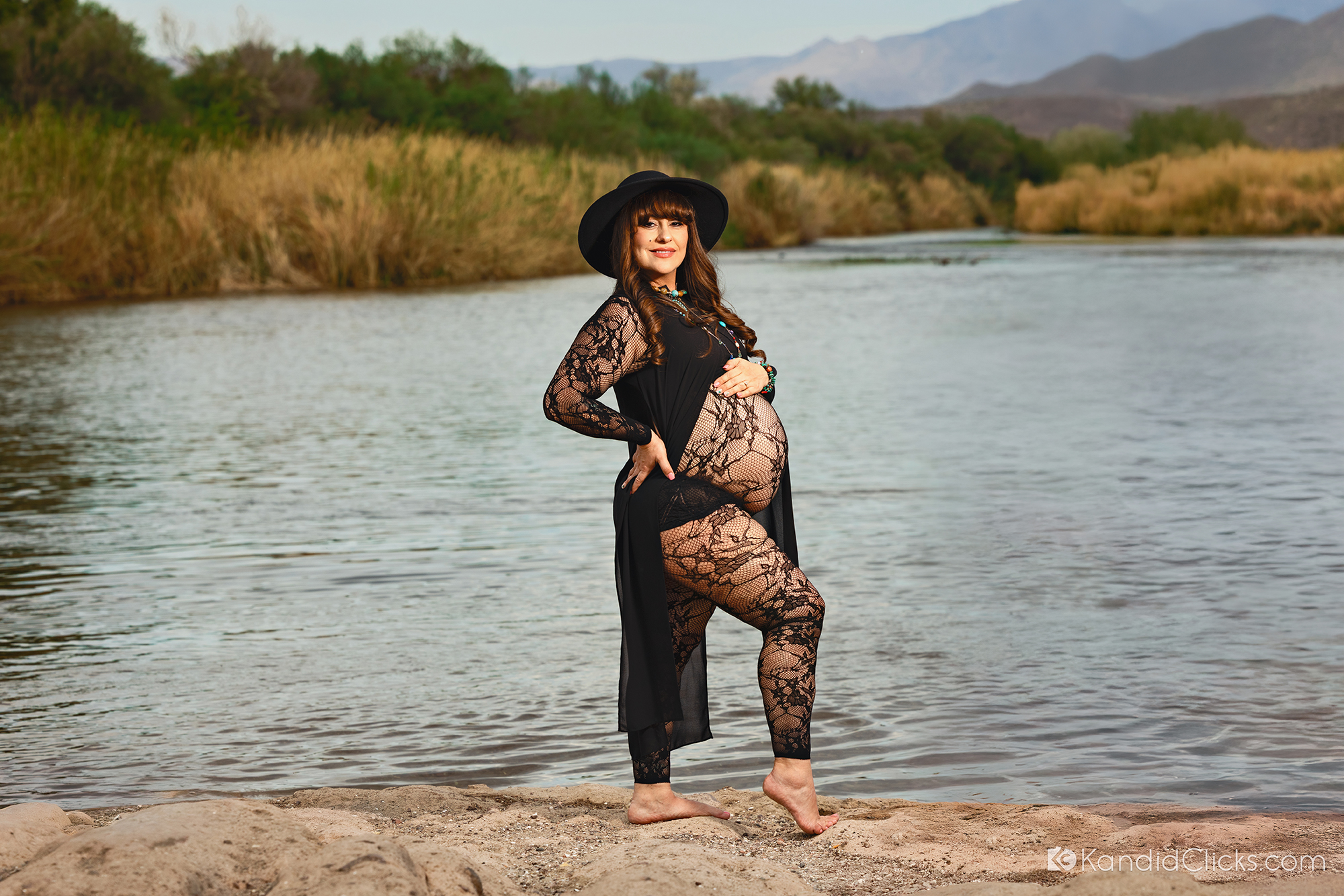
Wear a flowing dress in an earth tone, choose a fabric that catches the light and moves with the breeze, and pick shoes you can walk in on uneven ground. That is the short answer. The longer answer depends on where you are shooting, how far along you are, whether kids or a partner are in the frame, and how hot or mild the weather will be on your session day. Outdoor maternity photos in Phoenix work differently from the outfit guides you will find written for cooler parts of the country. Our fall is other people’s summer, our winter is other people’s spring, and our summer is genuinely dangerous for a long outdoor shoot. This guide walks through colors, fabrics, silhouettes, shoes, undergarments, seasonal choices, and the small personal items that make your images feel like yours. We will also cover what to do when your outfit does not fit anymore in the last weeks of pregnancy, how to test a dress at home before your session, and how to plan for a monsoon storm rolling in from the west while you are trying to get the last shot of golden hour. We are a husband-and-wife maternity photographers team based in Phoenix, Arizona, and everything below comes from what we have seen work session after session with a Phoenix maternity photographer lens.
The short answer: what actually works outdoors
If you want a fast checklist, this is what we recommend for almost every outdoor session:
- One flowing gown in a warm earth tone or a soft neutral
- One fitted piece that shows the shape of your bump
- Nude, seamless undergarments and a strapless bra
- Comfortable shoes you can walk in on rock or dirt
- A small bag with water, blotting sheets, powder, and lip color
- A meaningful personal item: an ultrasound, a pair of baby shoes, or a knit blanket
If you are shooting between late April and early October, add: a lighter change-of-clothes for the drive, a cooling pack in a small insulated bag, and closed-toe walking shoes to swap out of when you reach the location. If you are shooting between late October and early March, add: one warm layer that is easy to slip on and off between setups. Everything in the rest of this guide is a deeper answer to why those choices work and what to swap in if your session, your body, or the weather calls for something different.

What colors to wear for maternity photos outdoors
Color is the single decision that changes the mood of your images more than any other. The desert reads warm, dusty, and quiet in natural light, and the palette you wear either blends into that or fights it. Both can be beautiful. The choice is intentional. If you look at maternity photos you have saved on your phone or on Pinterest and try to describe why they feel a certain way, ninety percent of that feeling is coming from color.
Earth tones and warm neutrals photograph beautifully in natural light
Earth tone outfits for maternity photos are the safest choice in the desert and often the most striking. Camel, terracotta, rust, olive, sand, warm ivory, muted mustard, and warm cocoa sit inside the same warm family as the landscape, so the eye moves straight to your face and your bump instead of getting caught on a bright color. This is why golden hour desert portraits in warm neutrals feel so calm. Everything is in the same key.
Within the earth tone family, softer tones (sand, warm ivory, oat, dusty pink) read light and romantic. Deeper tones (rust, terracotta, olive, cocoa) read grounded and cinematic. If your visual style leans light and airy, choose from the top half of that list. If it leans moody and editorial, choose from the bottom half. If you cannot decide, camel and warm rust are the two colors we have shot more than any other, and neither has ever felt like the wrong call at the end of a session.
When jewel tones work and when they overpower the desert
Deep emerald, plum, burgundy, dark teal, and sapphire all photograph beautifully outdoors, but they need the right backdrop. A jewel tone gown against pale sand or a red rock formation looks intentional and dramatic. The same gown against a busy green backyard, a green golf course, or a park with strong red brick and playground equipment fights the scene and pulls the eye off you. If you love a jewel tone, choose your location around the color, not the other way around.
Jewel tones also hold their color well in low light, which makes them a strong pick for late-day sessions when the sun is soft and warm. Emerald and burgundy in particular photograph richly at the very end of golden hour when the light is going amber, because the warm light and the deep cool color balance each other. If you are shooting in the twenty minutes right before the sun sets behind the mountains, a jewel tone will look more saturated in your final images than it does in your mirror at home.
Whites, creams, and blush against Arizona backdrops
A white or cream gown against a river or a mountain reads soft, romantic, and timeless. Blush and dusty pink add warmth without going pastel. The one honest note about white outdoors: thin white cotton in bright Phoenix sun turns sheer. You can see it in your mirror at home in normal indoor light and think you are fine, then find out at the session that the sun coming through the fabric shows every seam and every strap underneath. Choose a heavier weight, add a slip, or plan for late-day light where the sun is lower and side-lit rather than overhead. Cream and warm ivory are almost always more forgiving than pure white on camera, and blush is more forgiving still.
If you love white and want the full flowing bright-white gown look, look for a fabric weight described as “heavyweight chiffon,” “double-layer chiffon,” or “lined.” A single layer of the cheapest chiffon will look beautiful on a hanger and disappear on you at three in the afternoon.
Black, deep green, and navy for a dramatic, cinematic feel
If your visual style leans darker and more editorial, a black or deep green gown against red rock reads dramatic in a way pastels cannot. Deep colors also work well for water shots because they hold their shape and color when wet. A wet black or wet emerald dress against desert sunset light is one of the most cinematic combinations you can shoot in Phoenix. Navy is the underrated middle ground, formal without feeling heavy.
A black gown in a slot canyon, against a monsoon sky, or on a rocky mountain trail at dusk is close to unbeatable if editorial images are what you want. The one time to think twice about black is if you are shooting in the middle of summer, because dark colors absorb solar heat in a way that is not just uncomfortable but genuinely unsafe when you are eight months pregnant. Save the black gown for October through March, or shoot it in the last twenty minutes of light in a summer session.
Colors and prints to skip outdoors
Neon colors (bright orange, neon pink, electric yellow, lime green) reflect onto your skin and turn it green or pink under bright sun. Large screen-printed logos, brand names, and busy florals compete with the landscape and date the images quickly. Very light pastels (baby blue, baby yellow, mint) can wash out at midday and read weak rather than soft. Small geometric prints, tight polka dots, tiny stripes, and small houndstooth can moire on camera, which is an optical distortion where the print appears to shimmer or crawl.
If you love a print, choose one with soft, wide brush strokes, a single large watercolor motif, or one wide floral rather than repeating small ones. A large abstract print in muted colors reads well on camera. A tight tropical print does not. Tie-dye can work if the colors are muted and blended smoothly. Sharp tie-dye with high contrast between the colors does not.

Best silhouettes and dress styles for outdoor maternity photos
There is no single flattering silhouette for a pregnant body. There are choices that show the bump, choices that hide it, and choices that do something in between. Outdoor sessions benefit from movement, so the silhouettes we lean into give you fabric to work with. Body type matters less than most people think for maternity outfits, because the bump is the visual anchor of every image. Choose based on how you want to feel and how much of your body you want visible, not based on some rule about which silhouette is best for whom.
Flowing gowns and maxi dresses
A flowing maxi with a fitted bust and loose skirt is the workhorse of outdoor maternity photography for good reason. It shows your bump when you turn sideways, it moves when you walk, and it catches the light in a way still fabric cannot. If you buy only one dress for the session, buy this one. Long sleeves add drama in the wind. Open shoulders keep the neckline elegant. A high slit or a train adds movement to walking shots without adding weight to the dress.
The most photogenic flowing gown has three qualities: a fitted bust that shows the bump line clearly, a waist seam that sits directly under the bust (empire waist) rather than at the natural waist, and a skirt long enough to trail slightly behind you. A gown that is too short shows sneakers or bare feet in every wide shot. A gown that is too fitted at the natural waist creates a fabric bunch above the bump that reads awkward. If you are ordering online and the listing does not tell you where the waist seam sits, ask, or size up so the seam sits higher on your body.
Fitted dresses and bodysuits that show the bump shape
A fitted dress or a bodysuit paired with a skirt gives you the strongest bump silhouette you can get on camera. The trade-off is comfort. Fitted fabric shows every waistband, seam, and shaping garment underneath, so plan your undergarments carefully. Bodysuits paired with a flowing skirt or a long open cardigan give you the fitted line up top and movement below. This combination works well for clients who want the shape without the commitment of a fully fitted floor-length gown.
Fitted looks work best between roughly twenty-eight and thirty-four weeks, when the bump is round and firm and the skin over it is stretched taut. Before twenty-eight weeks, fitted fabric can read soft rather than sharp. After thirty-six weeks, a fitted fabric can feel uncomfortable for the length of a session. If you are shooting close to your due date and love the fitted look, a stretch bodysuit with a flowing skirt gives you the same visual effect with more room to breathe.
Two-piece sets and bump-baring looks
A crop top with a maxi skirt, a bralette with a wrap skirt, or a lace robe over a slip lets you show skin directly on the bump. These looks photograph best when you have the confidence to move with them. If you are unsure, wear the top layer for warm-up shots and slip it off once you are comfortable. Bump-baring images do not need to be full-body. Close-ups with your hands on your skin and soft side light are often the images clients love most from a session.
Two-piece sets also give you the most flexibility for changes on location. A maxi skirt worn with a bralette for the first half of the session, then swapped for a fitted top for the second half, gives you two visually different looks without a full outfit change. The same skirt in a warm rust with a cream bralette, then the same skirt with a fitted white tank tucked in, reads as two entirely different outfits in the final gallery.
Maternity photoshoot outfit ideas with jeans
Not every session has to be a gown. Maternity photoshoot outfit ideas with jeans work well for relaxed outdoor sessions with a partner or older kids in the frame. A pair of high-rise stretch jeans folded under the bump, paired with a fitted white tank or a soft cropped sweater, gives you an honest, everyday look that ages well. Add a denim jacket over the shoulders for a second frame. This is a strong choice for a second maternity session that you want to feel different from a formal first one, and it is often the outfit clients feel most themselves in.
For jeans, look for either a full over-the-bump maternity panel (comfortable, invisible under a longer top) or a low-cut under-the-bump waistband (more flattering with a fitted tank). Skip skinny jeans in the last month because they cut off circulation in the calves for anyone standing for a while. A relaxed straight-leg or a wide-leg jean gives you range of motion and photographs cleaner than skinny. Distressed jeans work if the distressing is subtle. Heavy rips at the knees read like leisurewear rather than an intentional outfit.
Silhouette choices by body type
You do not need to change your outfit based on your body type. You can, if you want, focus a specific choice a little more intentionally. If you are petite, a shorter train and a higher slit keep the dress from overwhelming your frame. If you are tall, a floor-length gown with actual pooling at the hem uses your height to advantage. If you are plus size, a fitted bodice with a truly flowing skirt shows the bump shape while giving the rest of the body room to move (avoid tent-cut dresses that hide the bump entirely, unless that is what you want). If you have a longer torso, an empire waist that sits high emphasizes the bump. If you have a shorter torso, a slightly lower waist seam gives your midsection more visual length. None of these are rules. All of them are handles you can reach for if you are unsure.

Best fabrics for an outdoor maternity photoshoot
Fabric matters more than most guides admit. The same dress in a different weight can be gorgeous or awful. When you are choosing what to wear for an outdoor maternity photoshoot, look at the fabric before you look at the color. A gorgeous rust dress in a stiff polyester will photograph worse than an ordinary rust dress in a proper chiffon.
Fabrics that move
Chiffon, tulle, silk, soft cotton, and lightweight knit all move on their own and catch light beautifully. Chiffon and tulle are the classics for a reason. They lift in the smallest breeze and read as soft even in a still image. Silk holds its shape and photographs with an inherent glow. A soft, well-cut knit skims the body without clinging.
If a fabric hangs like a curtain when you hold it up, it will hang like a curtain on camera. If it drapes over your hand and shifts on its own, it will photograph beautifully. A quick at-home test: hold the dress by the shoulders and let it fall in front of a fan on medium. If the skirt lifts and floats, the fabric will move on camera. If it barely twitches, the fabric will look static in every image no matter how much wind is on your session day.
Chiffon comes in multiple weights. Standard chiffon is thin and floaty. Georgette is a slightly heavier chiffon with a matte finish that photographs well in bright sun. Silk chiffon is the premium version and moves better than any polyester chiffon. If you are ordering online and the fabric is listed as “chiffon” without further detail, it is almost certainly polyester chiffon, which is fine and photographs well.
Fabrics to skip outdoors
Thick denim tops sit stiff on the shoulders and lock the frame. Stiff synthetics reflect harsh points of light and can look plastic. Very thin cotton clings to sweat in Phoenix heat and shows every line underneath. Sequins and heavy beading catch bright sun in ways that flare on camera and pull the eye off your face. Fabrics with an obvious sheen (satin polyester rather than real silk) can also read cheap in bright natural light even when they look luxurious indoors.
Metallic fabrics photograph inconsistently outdoors. A metallic dress that looks like liquid gold indoors can look like plastic wrap at three in the afternoon. If you want a metallic look, either shoot at the very end of golden hour when the sunlight is warm and diffused, or choose a fabric with metallic threads woven through a matte base rather than a fully metallic surface. Rhinestones and heavy embroidery photograph beautifully in soft light and awfully in harsh light. If your dress has heavy embellishment on the bust, shoot late in the day.
Textured fabrics for depth
If you want your images to feel richer without a bold color, choose texture. Lace over a lining reads intimate and photographs well in soft light. Ribbed knit gives quiet depth in close-ups. Linen adds a lived-in warmth that works for casual outdoor sessions. Textured fabrics are the reason two gowns in the same color can look completely different on camera.
Different laces photograph very differently. Chantilly lace reads delicate and old-fashioned. Alençon lace reads formal. Eyelet lace reads casual and summery. Guipure lace reads modern and structured. If a listing just says “lace,” ask for a close-up of the pattern before you commit. Crochet is also a strong choice for casual sessions, especially in a warm cream or ivory.

What to wear for maternity photos in the desert
The Arizona desert is not the same as any other outdoor location. What to wear for maternity photos in the desert is a real question, and most outfit guides answer it as if the desert were a mildly warmer version of somewhere else. It is not. Between roughly late April and early October, the ground can be well over one hundred degrees at midday, and your outfit is part of your safety plan.
How to dress for maternity photos in hot weather
Choose lightweight fabrics with airflow. Chiffon, silk, soft cotton, and open weaves let heat move away from your skin. Skip anything with a full lining unless it is a light cotton. Long sleeves are not out of the question if the sleeve is chiffon or tulle, because those fabrics move air rather than trap it. Avoid tight elastic waistbands that dig in as your body warms.
Color also matters in heat. Darker colors absorb more solar heat, and standing in a black dress in direct Phoenix sun at ninety-five degrees will feel like standing in a black dress at one hundred and five. Lighter colors reflect more heat and keep you noticeably cooler. If you want to shoot in a deeper color during warm months, plan the session for the last hour of daylight, when the sun is low and the light is warm but the temperature has started to drop.
Bring a bottle of water and drink from it between every setup. Even if you love a heavier gown, wear a lighter dress on the drive in and change on site. Any of the outdoor maternity photoshoot locations in Phoenix that involve a walk from the parking area are easier if you save your session outfit for the moment you arrive.
A pre-session cooling routine
Start the day well hydrated, not just the hour before. Ice water helps in the moment. A cold pack behind your neck or under your wrists for a few minutes before we start cools you down faster than fanning your face, because the blood flow at those points cools your whole body. Loose hair traps heat, so if you want it down for photos, plan to pull it up for the walk. Powder before the session, not during, because sweat and fresh powder mix into a cakey look on camera. Eat a real meal ninety minutes before your call time. A sugar crash in ninety-degree heat is not something you want to fight through in the last twenty minutes of a session.
If you tend to get lightheaded when you stand for long periods (many people do late in pregnancy), tell your photographer before the session. We can build in a chair break every ten to fifteen minutes without breaking the flow of the shoot. Compression socks under a long gown help with circulation on a long-standing day, and no one will see them.
What to keep in the car or your bag
A refillable water bottle, a small towel, blotting sheets, translucent powder, chapstick, lip color, a hair brush, a small hand mirror, and a pair of nude sandals for walking between shots. If your session runs into a hot afternoon, keep your dress in the car with a portable fan or a cooler pack until we are ready to shoot. A small handheld fan is not a bad addition either. It looks a little silly, and it saves the shoot.
Add: a change of underwear if you are session-hydrating aggressively (pregnancy plus water plus heat plus a long session is a real combination), a wet washcloth in a plastic bag for a mid-session refresh, a pair of clean socks for the drive home, and a light snack that will not stain your outfit if you eat it in the car. Almonds, dried fruit, and a peanut butter cracker are cleaner than a chocolate bar in the front seat of a warm car.

What to wear for maternity photos in fall and winter in Phoenix
Most seasonal outfit guides on the internet were written for parts of the country with a real winter. In Phoenix, we do not have that. If you are wondering what to wear for maternity photos in fall or winter in Phoenix, the honest answer is that you do not need most of the cold weather layers those guides describe. Our cool months are also our best outdoor session months.
October through December: warm layers you can peel off
Daytime highs in October start in the mid-nineties and cool through the eighties by month’s end. November holds in the seventies. December drops to the mid-sixties in the afternoon and low forties overnight. A knit maxi dress, a long open cardigan over a fitted dress, or a wool-blend wrap adds seasonal texture without heat stress.
Deep jewel tones and warm rust colors look right this time of year. If you want a fall look with pumpkins or turning cottonwood leaves, this is your window. October evenings can still hit the low nineties in a warm year, so a light layer that you can carry rather than wear is often smarter than a heavy sweater. By late November and through December, a real knit dress or a cashmere layer is not just okay, it is comfortable.
January and February: our version of cool weather
Mornings can be genuinely cold, high thirties in the metro, but midday warms into the low sixties by early January and the high sixties by mid-February. A cashmere or wool sweater with a long skirt, a long-sleeved knit dress, or a coat over a slip gown all work. This is a good time for the moodier, more editorial looks because the sun angle is low almost all day and light stays soft for hours rather than the twenty golden-hour minutes you get in June. A wide-brim hat and boots add real seasonal character without needing a coat in the frame.
If you shoot on a January morning, expect your fingers and nose to go pink for the first twenty minutes and then warm up. The light in those first twenty minutes is the best light of the day. Come with gloves in the car, take them off just before we start, and get the cold morning images before the light gets ordinary.
Cozy textures that read as seasonal without overheating you
Cable knit, ribbed sweater dresses, wool wraps, faux fur throws for close-ups, and boots. You do not need a full winter coat for Phoenix photos. A single warm layer you can remove between setups gives you seasonal depth without turning the session into a sweat session. Cool months are also often the best time for maternity photos for outdoor comfort here, which is worth planning around if your due date gives you a choice.
Real fall foliage is limited in the Phoenix metro but does exist. Cottonwoods along the Salt River turn gold in November. Cottonwoods and sycamores in Sedona (a two-hour drive) turn full fall colors from mid-October through early November. Pumpkin patches open in October at farms in the west valley. If a fall aesthetic matters more than location convenience, plan the day trip and pack a heavier coat for the drive up, because Sedona is twenty degrees colder than Phoenix.

Shoes for outdoor maternity photos
Shoes for outdoor maternity photos are usually an afterthought, and they should not be. The wrong shoes end a session early.
Barefoot is beautiful when the ground is safe
Bare feet in a soft dress feels ethereal on camera, and it works when the ground is smooth sand, cool grass, or shallow water. It does not work on sharp rocks, on hot desert ground, or in areas with cactus needles or thorns. If the plan is barefoot, we scout the exact spot before you take your shoes off. In summer months, the ground temperature at three in the afternoon can burn bare skin in seconds, which is one of many reasons late-day light matters here.
Water sessions are the strongest case for bare feet. The Salt River and shallow creek beds in the metro area have smooth stones that feel good under your feet, and the water cools you off in a way nothing else will during a summer session. If you are shooting in water, plan for a small towel and dry socks for the walk back to the car.
Nude sandals, boots, and what disappears in the frame
For everything else, we recommend either nude sandals that blend with your skin tone or a pair of tan boots that intentionally show. Nude sandals disappear in wide shots and let a long gown do the visual work. Boots read intentional and grounded, especially with a rust or olive gown. Both are stronger choices than white sneakers, which pull the eye straight down and read casual in a way most maternity images do not want.
For sandals, look for a strappy nude sandal that matches your specific skin tone rather than a beige everyone considers neutral. A brown sandal on very pale skin reads dark. A pale beige sandal on deep skin reads like a bandage. If you can find a pair one shade darker than your leg, they will read as bare feet in every wide shot. For boots, ankle-length in a warm tan or cognac works best. Knee-high boots read heavier and work best in cool months and with a shorter dress.
Practical shoes for rocky riverbeds and desert trails
If we are shooting on a rocky riverbed or a desert wash, wear closed-toe hiking shoes on the walk in and swap into your session shoes at the location. Keep a small pack of bandages in your bag. A blister three weeks before your due date is not something you want to walk with.
If you are unsure about the terrain of your specific location, ask before the day, and we will send you exact photos of what you will be walking on. Some Phoenix locations (Papago Park, Camelback foothills, most of South Mountain) have real trail sections with loose gravel. Others (Salt River, city parks) have smooth ground almost the entire way to the shoot spot. This detail changes what shoes to bring.

Undergarments for a maternity photoshoot
Nude and seamless is the rule. Undergarments for a maternity photoshoot should not be visible in any way, and they should not leave marks on your skin that show up in the images. A nude strapless bra covers most necklines. A nude bralette works for lighter coverage under loose fabrics. Seamless nude high-waisted briefs sit under the bump and smooth the line.
For off-the-shoulder and backless dresses, an adhesive nude bra or nude pasties work better than a convertible strap. Adhesive bras are the single most useful maternity photoshoot undergarment. They work under gowns with plunging necklines, low backs, and thin straps that would show any traditional bra strap. Choose an adhesive bra one size up from your current cup size (pregnancy changes your size in ways you may not have noticed yet), and try it on at home in the same dress before session day. The wrong adhesive bra tries to slide down within twenty minutes of wear, and you want to know that before you are standing in a slot canyon.
For fitted dresses, shaping wear is helpful for smoothing not slimming. You are not trying to hide the bump, only to remove the line where a waistband would show through. Bump-specific maternity shapewear is not a gimmick. It smooths the line under a fitted dress without compressing the bump uncomfortably. Regular non-maternity shapewear compresses the bump and can be uncomfortable enough to shorten a session.
If a bra strap is going to sit under a spaghetti-strap gown, we can retouch small visible edges in post, but avoiding them at the source is always cleaner. One more small note: any elastic that has been on your body for hours before the session leaves red pressure marks that take an hour or more to fade. Change into your session undergarments right before we start, not that morning. If your session starts at 5 pm, your session bra should go on at 4:30 pm.
What to wear for family maternity photos outdoors
When your partner and kids are in the frame, the goal is a family that looks styled without looking staged. What to wear for family maternity photos outdoors comes down to a shared palette, not a uniform.
Coordinating, not matching
Pull two or three colors from your outfit and let your family wear pieces in those shades. Matching everyone in the exact same shirt reads dated and pulls attention off the bump. Coordinating in a shared palette reads intentional and lets each person look like themselves. A rust-toned dress on you, a warm ivory shirt on your partner, and an olive linen romper on a toddler is a shared palette that looks like a real family, not a catalog.
The rule of three works well here. Choose three colors within one warm or one cool family, and let each person wear one or two of those three. Warm palette example: cream, rust, olive. Cool palette example: dusty blue, cream, warm gray. Mixed palette example: cream, blush, deep green. Every family member wears at least one of the three colors, and no more than two people wear the same primary color.
What your partner should wear
A neutral button-down in soft cotton or linen, sleeves rolled to the forearm, with warm-toned pants (khaki, tan, warm brown, olive, or dark denim in cooler months) is a strong default. Avoid pure white because it blows out in bright sun. Avoid black on top with khaki bottoms because the contrast reads too sharp. A henley or a plain fitted tee works for a more casual session. Fitted enough to look intentional, loose enough to be comfortable.
If your partner has a favorite shirt they wear all the time, that shirt is often the strongest option, provided it is not a novelty piece. Real clothing that fits reads better on camera than a shirt purchased for the session and worn stiffly. If your partner does not own anything in your palette, a plain crew-neck sweater or a soft henley from any basics store solves it inexpensively.
For pants, dark wash jeans work in cool months. Chinos in a warm neutral work year-round. Skip cargo pants, athletic shorts, and gym pants. Skip shoes with prominent brand logos.
What to dress your kids in
Keep it simple. A neutral dress for a daughter, a linen shirt and shorts for a son, or a simple romper for a toddler. Skip anything with prominent characters or logos. Give kids shoes they can move in. If your child is old enough to have an opinion, let them pick one piece within your palette. A little ownership goes a long way toward a happy kid at minute thirty of the session.
For toddlers, one-piece rompers and simple pull-on dresses are far easier than multi-piece outfits that shift and get untucked. For elementary-age kids, a simple button-down (boys) or a soft dress (girls) works. For preteens who want to look styled, let them choose within a two-color palette rather than dictating. A preteen who feels good in what they are wearing looks better than one who feels forced.
If you have a very young baby who will be held during the session, dress them in a solid-color romper in the palette, not a novelty outfit. Their expression and skin do all the visual work.
Bringing grandparents or older siblings into the frame
If a grandparent or older sibling is joining, send them the same palette you sent your immediate family. Grandparents often ask what to wear and appreciate specific guidance. A neutral top and warm-toned pants works for almost any age. If a grandmother has a favorite scarf or piece of jewelry that means something to her, include it. Small personal details make multi-generational images sit better than perfectly coordinated outfits alone.
For blended families, keep the color palette shared but do not force uniform silhouettes. Older kids from a previous relationship should feel included without being pushed to match a younger sibling awkwardly. A wide palette (four colors in the same tonal family) gives everyone more range without breaking the visual cohesion.

What NOT to wear for maternity photos
A short list of what not to wear for maternity photos:
- Large screen-printed logos, brand names, or graphic tees
- Neon colors that reflect onto your skin
- Thin white cotton in bright midday sun, because it turns sheer
- Anything with tight elastic that leaves marks (bra bands, sock lines, waistbands you have been wearing for hours)
- Brand-new shoes you have not broken in
- Heavy makeup that looks polished in the mirror but reflects on camera
- Rigid corseted bodices that dig into a full-term bump
- Highlighter (the makeup) applied heavily on cheekbones, because it flares on camera
- Sequins, heavy beading, or full metallic fabrics in bright midday sun
- Novelty prints that will feel dated in three years
- Anything you feel obligated to wear but do not actually love
Most of these are comfort issues that become photo issues. Elastic marks fade in about an hour. Neon reflection does not fade at all. Wearing something you feel self-conscious in shows in your face, and there is no styling fix for that.
One extra note on jewelry: a large statement necklace competes with the bump line and often needs to be removed from the middle of a session anyway. A simple pendant, small hoops, a wedding ring, and a bracelet you always wear photograph better than a full styled jewelry set for one afternoon.
What to wear for a second maternity photoshoot
If this is your second, third, or fourth maternity session, the goal is to make the images feel visually distinct from the ones you already have. Repeating the same look from your first pregnancy tends to feel like a duplicate rather than a new memory.
Change one big variable. Swap outdoor for studio, or the other way around. Change the season, which changes the light and the palette almost automatically. Move from a flowing pastel gown to a fitted jewel tone, or the other way around. Include your older child in a way you could not with your first. That last one is often the strongest visual difference. Photos of you cradling a bump while your two-year-old rests a hand on it tell a completely different story from the solo images of your first pregnancy.
If you loved the first session and want the same aesthetic, choose a different location within the same visual family. A river session followed by a mountain session both feel outdoor and Arizona, but the images will not look like copies of each other. If you want to lean casual after a formal first pregnancy, jeans and a fitted top with your older child on your hip is a strong direction. If you want to lean formal after a casual first pregnancy, a floor-length gown at golden hour is the answer.
For a third or fourth session, the visual distinction gets harder because you have already used several of the obvious options. This is a good time to try a location you have never shot before, a cultural outfit that reflects your family, a heirloom piece from an older female relative, or a session that focuses more on the older kids’ relationship with the bump than on you specifically. A close-up of three siblings’ hands together on the bump, in a color palette that matches their bedroom, is a completely different image from anything you already have.
What to bring to a maternity photoshoot: props and personal touches
Props sound gimmicky in the abstract, and the wrong ones are. The right ones make the images specifically yours instead of a generic beautiful session. What to bring to a maternity photoshoot depends on what your family is celebrating and what you want to remember in a decade.
Ultrasound photos and pregnancy test sticks
An ultrasound image held next to the bump makes for one of the most tender close-ups you can take. If you have kept the original pregnancy test, that is another quiet, honest image. Both work best in soft light with your hands in frame. Neither photographs well as a large full-body image, but as a small held detail they are often the frames clients hang first.
If you have a 3D or 4D ultrasound printed larger, bring that too. The higher-detail ultrasounds photograph better than the smaller black-and-white first-trimester images, because the contrast is stronger and the shape of the baby is more visible. Both have their place. Bring what you have.
Baby shoes, a knit blanket, or a heirloom item
A pair of tiny shoes resting on the bump, a knit blanket you or a family member made, a bracelet from your own baby years, a christening gown from a grandparent. Objects tie generations together in a way words in a caption cannot. If your mother saved anything from your own babyhood, this session is the reason to bring it.
The best heirloom items have color and shape simple enough to work in a photograph. A crocheted white blanket, a pair of white leather booties, a silver bracelet, a wooden rocking horse ornament. Complex heirlooms (a full quilt, a christening gown with lots of detail) can also photograph well but need a specific setup to show them properly. Tell your photographer what you are bringing before session day so we can plan a shot around it.
What to dress your kids in
Keep it simple. A neutral dress for a daughter, a linen shirt and shorts for a son, or a simple romper for a toddler. Skip anything with prominent characters or logos. Give kids shoes they can move in. If your child is old enough to have an opinion, let them pick one piece within your palette. A little ownership goes a long way toward a happy kid at minute thirty of the session.
For toddlers, one-piece rompers and simple pull-on dresses are far easier than multi-piece outfits that shift and get untucked. For elementary-age kids, a simple button-down (boys) or a soft dress (girls) works. For preteens who want to look styled, let them choose within a two-color palette rather than dictating. A preteen who feels good in what they are wearing looks better than one who feels forced.
If you have a very young baby who will be held during the session, dress them in a solid-color romper in the palette, not a novelty outfit. Their expression and skin do all the visual work.
Older sibling touches
If you have older kids, a “big brother” or “big sister” shirt works well without being cheesy. A drawing they made of the new baby, a stuffed animal they want to give the baby, or an ultrasound they are holding all photograph beautifully. Older kids also do better with a small job to do in the frame than with instructions to look at the camera.
If your older child is old enough to have practiced kissing your belly or talking to the baby, capture that as its own moment. Those images tend to outlast the more posed family shots because they show a real relationship, not a staged one.
Cultural and family-specific items
Kandid Clicks Photography families from every background in the Phoenix metro, and some of the most meaningful maternity images we shoot include cultural items rather than generic ones. A rebozo (Mexican shawl) draped over the bump. A traditional gold bangle from an Indian grandmother. A rosary that has been in the family for generations. A hand-carved rattle. A first-baby gift from your own baby shower saved for years.
If you are unsure whether a cultural item will photograph well, bring it and ask on the day. It is far easier to include something you have with you than to wish you had brought it.
Simple accessories and personal items
A flower crown, a wide-brim hat, minimal jewelry, or a scarf you have owned for years. Accessories should feel like they belong to you rather than to the shoot. If you would not wear it any other day, it is going to look borrowed on camera. Your wedding ring, a necklace you wear every day, and the watch your partner gave you are all worth more visually than a rented statement piece.
Fresh flowers work well but wilt in the heat. If you want fresh flowers in the images, bring them in a small water bottle in the car and only put them in your hand or in your hair for the actual shot. Dried flowers hold up better in warm months.

How to test your outfit before your session day
Do a full outfit test at home a week before your session. Put on the dress, the underwear you plan to wear, the shoes, and any jewelry you want to include. Look at yourself in a full-length mirror in natural light next to a window. If you have a partner or a friend, ask them to take three photos on their phone: one front, one side profile, one three-quarter turn. Do not use a flash. Do not overhead-light yourself.
Look at those three photos before you look in the mirror again. The phone photo tells you what the fabric actually looks like on camera, which is different from what it looks like in a mirror. If you can see any underwear line, any waistband, any bra strap edge, any elastic mark, or any awkward fabric bunch, adjust before session day. If the dress rides up when you move, plan how you will keep it down. If the neckline slips when you raise your arms, plan for that.
Then do the same test with the fan on medium blowing across your body. This is your movement test. Watch how the skirt lifts, how the sleeves float, and whether any part of the outfit becomes see-through when the fabric is in motion. Fix what you can now. Change what you cannot.
If you are testing more than one outfit, do this for each one. It takes ten minutes per outfit and saves the “oh no” moment on session day.
What to do if your outfit does not fit anymore
Late-pregnancy bodies change fast. It is common to try on a dress at thirty weeks that fit at twenty-eight and find that the fabric has run out of stretch. A few practical options if this happens before or on session day:
Order a size up now. Many maternity gowns arrive in three to five days if ordered from a domestic retailer. If your session is more than a week out, this is the easiest fix. Do not wait to see if the dress will still fit closer to the session.
Use a two-piece set instead of a dress. A wrap skirt and a bralette adjust to nearly any bump size. So does a maxi skirt and a fitted top. Two-piece looks scale with your body more forgivingly than a single-piece dress.
Add a fabric extender. For a fitted dress with a back zipper, an inexpensive zipper extender (or a strip of matching fabric tied at the back) can add two or three inches of room. This works best if the dress has a defined back closure. It does not work for pull-over dresses.
Use the client closet. If your session is with a photographer who offers a closet, this is the situation the closet exists for. Nothing fits, session is tomorrow, no time to shop. Come in early, try on three options, shoot in one.
Change plans. If the dress you loved genuinely does not fit and no other option feels right, swap the shoot idea. A relaxed session in high-waisted jeans and a stretchy top is not a downgrade. It is a different session that photographs well.
When you do not want to buy a new outfit
Buying a gown for a single afternoon is not the only path, and often not the best one. If you love the look of a full flowing maternity gown but do not want to spend on a dress you will wear once, our sessions include access to a curated client closet of maternity gowns in sizes small through XXL. You come in, try on a few, and shoot in the one that fits and feels right that day. It removes the pressure of shopping when you are already tired, and it means you never have to guess how a fabric will move on camera.
A closet is also useful if you are unsure what silhouette you want until you see yourself in it. Three gowns on a screen look flat. Three gowns held up against your body in a mirror tell you immediately which one is right for you. Most clients come in wanting one style and shoot in a different one after they try them on.
Your own wardrobe is also a real option. A well-fitted dress you already own, a flowing skirt with a bralette, or high-waisted jeans with a fitted top can all be beautiful. The clothes that fit and feel like you often photograph stronger than the ones you bought two weeks ago and have not worn since. There is no rule that says a maternity photoshoot outfit has to be new.
Renting a gown online is another middle path. Rental services ship a gown, you shoot in it, and you ship it back. Some maternity-specific rental services carry high-end designer pieces at a fraction of the purchase price. Read the shipping windows carefully. A gown that arrives two days late is worse than no rental at all.
Ultrasound photos and pregnancy test sticks
An ultrasound image held next to the bump makes for one of the most tender close-ups you can take. If you have kept the original pregnancy test, that is another quiet, honest image. Both work best in soft light with your hands in frame. Neither photographs well as a large full-body image, but as a small held detail they are often the frames clients hang first.
If you have a 3D or 4D ultrasound printed larger, bring that too. The higher-detail ultrasounds photograph better than the smaller black-and-white first-trimester images, because the contrast is stronger and the shape of the baby is more visible. Both have their place. Bring what you have.
Baby shoes, a knit blanket, or a heirloom item
A pair of tiny shoes resting on the bump, a knit blanket you or a family member made, a bracelet from your own baby years, a christening gown from a grandparent. Objects tie generations together in a way words in a caption cannot. If your mother saved anything from your own babyhood, this session is the reason to bring it.
The best heirloom items have color and shape simple enough to work in a photograph. A crocheted white blanket, a pair of white leather booties, a silver bracelet, a wooden rocking horse ornament. Complex heirlooms (a full quilt, a christening gown with lots of detail) can also photograph well but need a specific setup to show them properly. Tell your photographer what you are bringing before session day so we can plan a shot around it.
What to dress your kids in
Keep it simple. A neutral dress for a daughter, a linen shirt and shorts for a son, or a simple romper for a toddler. Skip anything with prominent characters or logos. Give kids shoes they can move in. If your child is old enough to have an opinion, let them pick one piece within your palette. A little ownership goes a long way toward a happy kid at minute thirty of the session.
For toddlers, one-piece rompers and simple pull-on dresses are far easier than multi-piece outfits that shift and get untucked. For elementary-age kids, a simple button-down (boys) or a soft dress (girls) works. For preteens who want to look styled, let them choose within a two-color palette rather than dictating. A preteen who feels good in what they are wearing looks better than one who feels forced.
If you have a very young baby who will be held during the session, dress them in a solid-color romper in the palette, not a novelty outfit. Their expression and skin do all the visual work.
Older sibling touches
If you have older kids, a “big brother” or “big sister” shirt works well without being cheesy. A drawing they made of the new baby, a stuffed animal they want to give the baby, or an ultrasound they are holding all photograph beautifully. Older kids also do better with a small job to do in the frame than with instructions to look at the camera.
If your older child is old enough to have practiced kissing your belly or talking to the baby, capture that as its own moment. Those images tend to outlast the more posed family shots because they show a real relationship, not a staged one.
Cultural and family-specific items
Kandid Clicks Photography families from every background in the Phoenix metro, and some of the most meaningful maternity images we shoot include cultural items rather than generic ones. A rebozo (Mexican shawl) draped over the bump. A traditional gold bangle from an Indian grandmother. A rosary that has been in the family for generations. A hand-carved rattle. A first-baby gift from your own baby shower saved for years.
If you are unsure whether a cultural item will photograph well, bring it and ask on the day. It is far easier to include something you have with you than to wish you had brought it.
Simple accessories and personal items
A flower crown, a wide-brim hat, minimal jewelry, or a scarf you have owned for years. Accessories should feel like they belong to you rather than to the shoot. If you would not wear it any other day, it is going to look borrowed on camera. Your wedding ring, a necklace you wear every day, and the watch your partner gave you are all worth more visually than a rented statement piece.
Fresh flowers work well but wilt in the heat. If you want fresh flowers in the images, bring them in a small water bottle in the car and only put them in your hand or in your hair for the actual shot. Dried flowers hold up better in warm months.

Frequently asked questions about maternity photoshoot outfits
What colors are best for outdoor maternity photos?
Earth tones and warm neutrals are the strongest choice for outdoor sessions in Phoenix because they sit in the same warm family as the desert landscape. Camel, rust, terracotta, olive, ivory, and warm blush all photograph beautifully. Jewel tones like emerald and burgundy also work when the location has a neutral backdrop rather than a busy one.
What should I wear for maternity photos in hot weather?
Choose lightweight fabrics like chiffon, silk, or soft cotton with real airflow. Avoid tight elastic waistbands, heavy synthetics, and full linings. Wear a lighter outfit on the drive in and change on site if the shoot involves any walk. Bring water, blotting sheets, and translucent powder. Long chiffon sleeves work in heat because they move air rather than trap it.
How many outfits should I bring?
Two outfits is the sweet spot for most outdoor sessions. One flowing gown for movement and one fitted look for a strong bump silhouette gives you variety without eating session time on wardrobe changes. Three outfits works for longer sessions, but each change takes ten to fifteen minutes on location, so plan the extra time.
Can I wear jeans for maternity photos?
Yes, and jeans can look beautiful. High-rise stretch jeans folded under the bump with a fitted white tank, a cropped soft sweater, or a bralette gives you an honest, everyday look. Denim works especially well for relaxed sessions with a partner or older kids, and for second maternity sessions that need to feel different from a formal first pregnancy.
What should I wear for a maternity photoshoot in Phoenix winter?
Phoenix winter is mild by most standards. Daytime highs sit in the sixties and low seventies in January and February. A knit maxi, a long-sleeve wrap dress, a sweater dress with boots, or a fitted gown with a wool wrap all work well. You do not need a heavy coat for the frame, only a warm layer between setups.
Should my partner wear white?
Pure white on top blows out in bright Phoenix sun and pulls attention off your bump. A soft cream, warm ivory, or oatmeal reads similar in tone but photographs cleaner. A neutral button-down in linen or soft cotton with warm-toned pants is a stronger default than a bright white shirt for outdoor sessions with any midday light.
What fabric photographs best outdoors?
Chiffon and tulle move in the smallest breeze and read soft even in still images. Silk holds its shape and glows in natural light. Soft cotton and lightweight knit skim the body without clinging. Avoid stiff synthetics, thick denim tops, sequins, and very thin cotton that clings to sweat in Phoenix heat.
Do I need to buy a new outfit?
No. Well-fitted pieces from your own wardrobe often photograph better than a rushed online order because you already know how they feel. If you want the full flowing gown look without the purchase, a client closet solves that. Choose comfort and fit first, because both come through in your face and in the images.
What if my bump is smaller than I expected at 30 weeks?
A smaller bump still photographs beautifully with the right silhouette. Choose a fitted dress or a bodysuit that hugs the shape rather than a flowing gown that hides it. Side-profile poses and hands cupped under the bump help emphasize the shape. Bumps vary widely by pregnancy, and a smaller bump is not a smaller image.
How do I choose between flowy and fitted?
Flowy dresses read soft, romantic, and movement-heavy. Fitted dresses read strong, sculptural, and bump-forward. Most clients bring one of each and shoot half the session in each. If forced to choose one, a flowing dress works for a wider range of light and a wider range of comfort levels late in pregnancy.
Ready to plan your outdoor maternity session
The best outfit is the one you can move in, that fits the bump the day of the session, and that feels like you rather than a costume. Everything else, colors, silhouettes, seasons, shoes, undergarments, is a set of practical decisions that get easier when you know how outdoor light and the Arizona landscape work together. When you are ready to book, our maternity photography packages include closet access, location scouting, and a pre-session styling call to walk through your specific outfits before the day. Bring the ultrasound. Bring the tiny shoes. We will handle the light.